

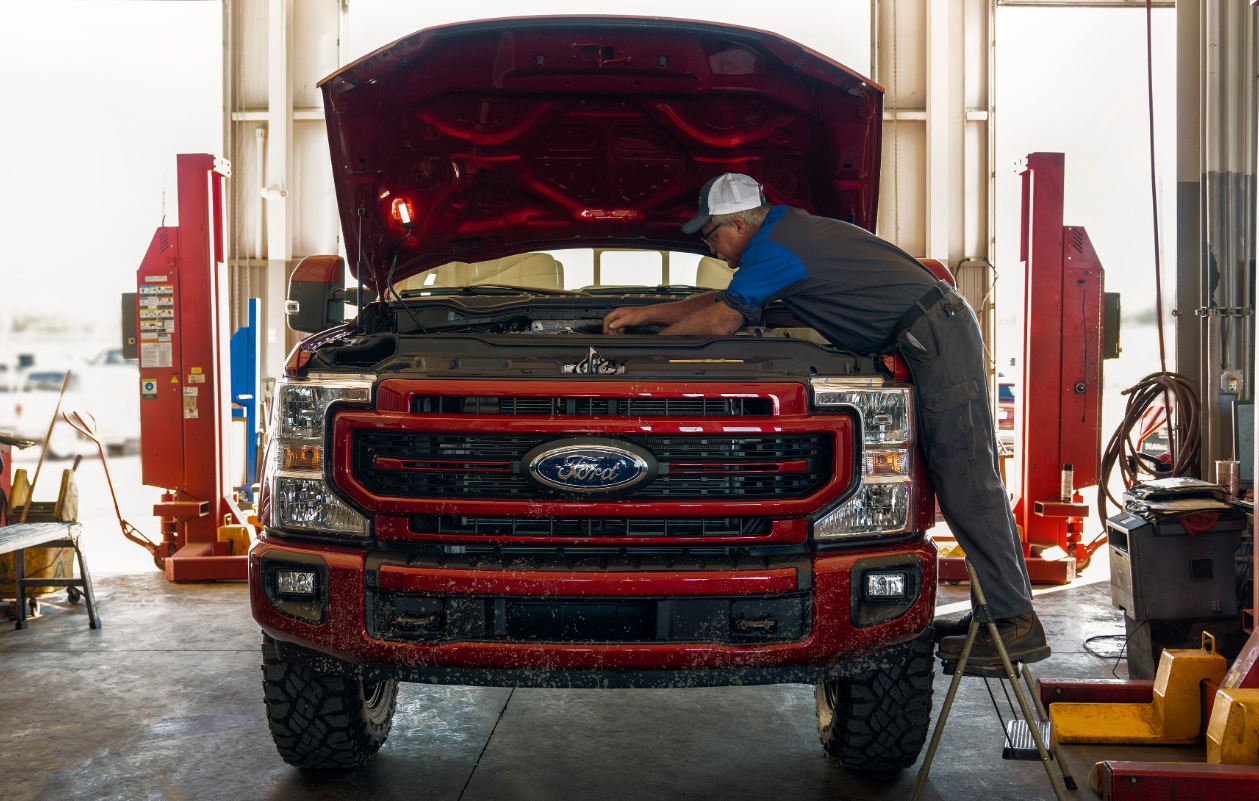
Your Ford F-150 is built to handle demanding jobs and everyday driving with confidence. But keeping it running like new? That takes consistent care, the kind that stops small issues from turning into wallet-busting repairs.
Whether you’re hauling equipment across Pennsylvania or just commuting to work, sticking to the right Ford F-150 maintenance schedule protects your investment and keeps everything running smoothly for years.
Understanding Your F-150’s Maintenance Schedule
Here’s the thing about F-150 maintenance schedules: they’re not one-size-fits-all. Your service needs change based on your model year, engine type, and how hard you work your truck. Drive style matters too. Towing heavy loads regularly, dealing with stop-and-go traffic, extreme temperatures, or taking your truck off-road counts as severe duty. Those conditions need more attention than steady highway cruising.
Modern F-150s have this clever Intelligent Oil-Life Monitor (IOLM) that watches your actual driving habits. It looks at engine temperature, RPM, trip length, all that stuff, then calculates when service makes sense. Pretty smart system, but it works best when you also know Ford’s recommended maintenance milestones.
Essential Service Intervals Every F-150 Owner Should Know
F-150 maintenance follows a logical pattern that matches up with how components actually wear out.
Routine Maintenance (5,000-15,000 Miles)
This is your maintenance foundation. Oil changes depend on what’s under your hood. Standard driving lets you go 7,500-10,000 miles using Ford-approved 5W-30 full synthetic oil meeting current Ford specifications (consult your owner’s manual for your engine’s exact requirement). However, the EcoBoost engines or heavy use cuts that to 5,000-7,500 miles.
Rotate those tires every 7,500-10,000 miles. Sounds simple, but it makes a real difference in how evenly they wear. During routine visits, good technicians check fluid levels, inspect belts and hoses, look at brake pad thickness, test battery condition. It’s like a physical exam for your truck.
Engine air filters typically need replacing every 15,000-30,000 miles (more often if you drive in dusty conditions). Cabin air filters keep your air quality decent, usually lasting 20,000-30,000 miles. Don’t forget wiper blades during these visits, especially if you’re dealing with Pennsylvania’s seasonal weather changes.
Mid-Range Services (30,000-60,000 Miles)
As miles pile up, your service requirements expand. Brake inspections every 20,000 miles keep stopping power reliable. That 10-speed transmission needs fluid service somewhere between 30,000-60,000 miles, particularly if you tow regularly. Your cooling system starts demanding attention too, with the coolant flush recommended at 60,000 miles.
Belt inspection gets more serious during this phase. The serpentine belt drives your alternator, water pump, power steering. Replace it before you see visible cracking, trust me on this one. Technicians will also examine your battery more carefully since most original batteries start showing their age around this mileage.
Operating under severe conditions means axle fluids need service at 30,000 miles. That includes regular towing, dusty environments, lots of short trips under 5 miles, or extended idling.
High-Mileage Milestones (100,000+ Miles)
Six figures on the odometer doesn’t mean retirement time. These trucks routinely exceed 200,000 miles with proper care. Spark plug replacement typically hits between 60,000 and 100,000 miles, depending on your engine. The EcoBoost engines generally benefit from earlier replacement around 60,000 miles, while naturally aspirated V8s are typically rated for up to 100,000 miles. The orange coolant system needs replacement here too, refreshing those corrosion inhibitors that protect internal components.
Transmission fluid replacement (not just checking it) often makes the schedule at this point. Fresh fluid keeps shifts smooth and extends transmission life. Suspension components face closer scrutiny now. Shock absorbers, ball joints, tie rod ends wear gradually but really impact handling when they’re shot.
For 4×4 models, transfer case fluid service happens at 150,000 miles under normal conditions, or 60,000 miles for severe duty use. Thinking about keeping your truck well beyond this milestone? You might want to browse our new F-150 inventory to see what today’s models offer.
Oil Changes: The Foundation of F-150 Longevity
Oil changes are absolutely the most important thing you can do for your F-150. Engine oil lubricates moving parts, cuts friction, removes contaminants, helps regulate temperature. The IOLM gives you personalized guidance based on how you actually drive, but checking the oil level manually between changes is still smart.
Quality filters matter just as much. Cheap filters might not trap fine particles or maintain flow under tough conditions. Oil changes also give technicians a chance to spot developing problems. They’ll notice metal particles that indicate internal wear, check oil color and consistency, look for leaks around seals and gaskets. Schedule your F-150 service today to build a relationship with technicians who learn your truck’s history.
Tire Rotations and Brake Inspections
Tires connect you to the road, making their condition critical for safety and performance. The F-150’s weight distribution creates uneven wear patterns without regular rotation. Moving tires around every 7,500-10,000 miles equalizes wear and extends their life, potentially adding thousands of miles to a set.
During rotation, technicians check tread depth, look for unusual wear patterns that might indicate alignment issues, and verify tire pressure. Proper inflation improves fuel economy and prevents premature wear.
Brake inspections usually happen during routine services. Your F-150’s brake system works hard, especially when towing or hauling. Catching thin pads early prevents rotor damage, which costs significantly more to fix. Brake fluid should look clear or light amber. Dark fluid means moisture contamination and needs replacement soon.
Warning signs like squealing, grinding, or pulsation during braking need immediate attention. These symptoms suggest pad wear, rotor damage, or caliper problems that affect stopping ability. Steering wheel vibration during braking often means warped rotors requiring resurfacing or replacement.
Seasonal Maintenance Tips for Pennsylvania F-150 Owners
Preparing Your F-150 for Pennsylvania Winters
Pennsylvania’s four seasons each present unique challenges. Getting your truck ready for winter protects against cold-weather failures and ensures reliable operation during snow and ice.
Battery testing becomes crucial before winter hits. Cold temperatures reduce battery capacity, and a marginal battery that starts fine in summer will fail when temperatures drop. Most batteries last three to five years. Corroded terminals hurt charging efficiency, so cleaning connections during inspection helps reliability.
Antifreeze strength testing ensures your cooling system handles sub-zero temperatures without freezing. Pennsylvania winters regularly see temps well below freezing, making proper coolant concentration essential. Low antifreeze levels or worn hoses can lead to overheating or freeze damage.
Tire condition and tread depth matter way more in winter. Worn tires lose grip on snow and ice, increasing stopping distances and reducing control. Tire pressure drops about 1 psi per 10°F (approximately 5.6°C) temperature decrease, so checking and adjusting pressure monthly during cold months maintains proper road contact. Lower viscosity synthetic oil like 5W-30 helps cold-weather startups.
Spring and Summer Maintenance After a Hard Pennsylvania Winter
Spring preparation focuses on recovering from winter’s harsh conditions. Wash away that road salt to prevent rust. Test your air conditioning before summer heat arrives to avoid uncomfortable surprises. Schedule seasonal service to help your F-150 handle Pennsylvania’s changing weather.
Warning Signs That Shouldn’t Wait for Your Next Service
Your F-150 talks to you when something needs attention. Ignoring these warning signs leads to bigger problems and higher repair bills.
Dashboard Warning Lights and Strange Noises
Dashboard warning lights have specific meanings. The check engine light means there’s a fault code stored in your truck’s computer. Oil pressure warnings demand immediate attention. Continue driving with low oil pressure and you can destroy your engine in minutes.
Strange noises often point to specific problems. Squealing during acceleration suggests belt wear or tensioner failure. Clicking or popping when turning points to CV joint problems. Grinding during braking means metal-on-metal contact and damaged rotors. Knocking from the engine indicates serious internal issues needing expert diagnosis.
Handling Changes and Fluid Leaks
Changes in handling or performance shouldn’t be ignored either. Pulling to one side while driving suggests alignment problems or tire issues. Vibration at highway speeds often indicates balance problems or damaged tires. Rough idling, hesitation during acceleration, or reduced fuel economy signal engine or fuel system problems. Transmission slipping or hard shifting needs immediate professional evaluation.
Fluid leaks under your parked truck identify specific problems by color and location. Red fluid indicates transmission issues. Green or orange fluid points to coolant leaks. Dark brown or black oil suggests engine, differential, or transfer case leaks.
Keep Your F-150 Running Strong at John Kennedy Ford Phoenixville
Expert Service from Factory-Trained Technicians
Following Ford’s recommended service intervals keeps your F-150 performing reliably for years. Factory-trained technicians understand F-150 systems thoroughly and have access to technical information covering your specific model year and engine, including Ford technical service bulletins and software updates only available through authorized service.
Our service department at John Kennedy Ford Phoenixville offers comprehensive F-150 service using genuine Ford parts designed specifically for your truck. We’re located at 730 Valley Forge Road in Phoenixville, Pennsylvania, and our certified technicians stay current with the latest F-150 technology through ongoing factory training. Call us at 484-921-1042 to discuss your maintenance needs.
Convenient Scheduling and Long-Term Service Benefits
We offer flexible appointment times and convenience options, including Ford Mobile Service and pickup/delivery when possible. Building a service history at one location provides real advantages. Technicians familiar with your truck’s maintenance records can spot patterns and anticipate future needs. Detailed service records also boost resale value, proving proper maintenance to potential buyers.
Need guidance on your specific F-150 maintenance schedule or have questions about recommended services? Contact our team for personalized advice. We understand local Pennsylvania driving conditions and can recommend adjustments to standard intervals based on how you use your truck, keeping your F-150 running strong through every season and every mile.
Connect with us

