

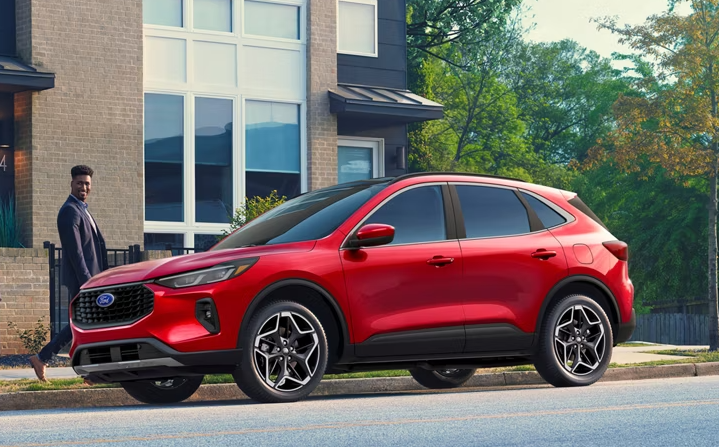
Sitting in traffic on Route 23 during rush hour or mapping out that weekend trip to Valley Forge shouldn’t trigger worries about range or fuel costs. These concerns pop up daily at our dealership, and honestly, we get why picking between traditional, hybrid, and electric feels like such a big decision. Ford’s 2026 hybrid and EV models were designed around the actual driving Chester County residents do every day (school pickups, supply runs to Home Depot, that commute to King of Prussia). Browse our hybrid and EV lineup to see how these vehicles tackle everything from quick errands to cross-state road trips.
Ford’s 2026 lineup spans both hybrid and all-electric choices across compact SUVs, pickups, and commercial vans. You won’t have to compromise on the vehicle style you want just to get better efficiency or zero-emission driving. Hybrids combine gasoline engines with electric motors to slash fuel consumption without requiring charging infrastructure, while EVs offer pure electric performance for drivers ready to make the full switch.
Understanding Ford’s 2026 Hybrid and EV Options
Hybrid vehicles marry a gasoline engine with electric motors that collaborate seamlessly, automatically switching between power sources depending on driving conditions. You still stop at regular gas stations (no charging required). Plug-in hybrids (PHEVs) add battery charging capability so you can drive purely on electricity for shorter distances, then shift to hybrid mode once electric range depletes.
All-electric vehicles run completely on battery power. You charge them at home overnight using a standard outlet (Level 1) or faster with a 240-volt setup (Level 2). Public fast-charging stations can add substantial range in 30 to 40 minutes during longer trips. Ford engineered their EVs with sufficient range to handle typical daily driving without constant charging stops.
The choice between hybrid and electric boils down to your driving patterns and charging access. Hybrids excel when you want better efficiency without changing refueling habits. EVs make the most sense when you can charge at home consistently and cover predictable daily distances. Both reduce or eliminate tailpipe emissions, though EVs produce zero emissions while driving.
2026 Ford Hybrid Models: Efficiency Meets Everyday Practicality
Ford’s hybrid lineup delivers practical efficiency across three vehicle categories (proven powertrains built for families, small business owners, and anyone wanting better fuel economy without sacrificing utility).
Ford Escape Hybrid and Plug-In Hybrid
The Escape Hybrid achieves 42 mpg city and 36 mpg highway with its 2.5-liter Atkinson-cycle engine and electric motors, creating 192 horsepower total. Compare that to the regular gasoline Escape getting around 27 mpg city (FWD 1.5L EcoBoost), and you’re looking at nearly half the fuel stops during your Chester County commute. Pick front-wheel drive for maximum efficiency or add all-wheel drive for winter weather.
The Escape Plug-In Hybrid bumps output to 210 horsepower and adds 37 miles of electric-only range. Your morning run to King of Prussia Mall and back could use zero gas if you plugged in overnight. When the battery runs down, it operates like a regular hybrid getting 40 mpg combined. Both Escape options fit into the Ford SUV family, providing cargo space while cutting fuel costs.
Ford Maverick Hybrid
Ford built the Maverick Hybrid as America’s most fuel-efficient pickup, pairing a 2.5-liter four-cylinder with a permanent-magnet electric motor for 191 horsepower. The compact unibody design makes parking easier than traditional full-size trucks while still delivering a useful bed for Home Depot runs or weekend gear.
This hybrid setup excels in stop-and-go traffic where the electric motor handles low-speed driving, saving fuel during inefficient conditions that devastate conventional truck mileage. The Maverick’s size and efficiency hit the perfect spot for suburban homeowners who need truck capability occasionally but don’t want to drive or fuel a massive pickup every day.
Ford F-150 PowerBoost Hybrid
The F-150 PowerBoost doesn’t force you to choose between capability and efficiency. Ford’s hybrid system pairs a V6 with electric motors to produce 430 horsepower and 570 lb-ft of torque (enough to tow up to 11,600 pounds when properly equipped). That matches or beats many conventional F-150 engines while delivering hybrid fuel savings.
Pro Power Onboard transforms your truck into a mobile generator with up to 7.2 kilowatts of exportable power. Run tools at job sites without hauling a separate generator, keep appliances going during outages, or power your campsite at French Creek State Park. The hybrid system also runs quieter at low speeds, makes merging onto I-76 smooth, and delivers instant torque for confident passing. For contractors, small business owners, or anyone using their truck for work and family life, the PowerBoost provides full-size capability with noticeably better fuel economy.
2026 Ford Electric Vehicles: All-Electric Daily Driving
Ford’s all-electric vehicles eliminate gas stations entirely, running purely on battery power. These models target drivers ready to embrace charging infrastructure while enjoying zero tailpipe emissions, lower operating costs, and instant electric torque.
Ford Mustang Mach-E
The Mustang Mach-E brings athletic performance to the electric SUV category. Ford’s EPA estimates range from 226 miles for the lowest-range configuration up to 320 miles for the Premium RWD extended-range model, with the GT rated at 280 miles, handling most daily driving with buffer. That instant electric torque makes merging into highway traffic effortless.
Inside, you’ll find a spacious cabin with SYNC 4 infotainment that helps locate charging stations and plans routes based on battery level. The elevated SUV seating provides excellent visibility while the hatchback design offers flexible cargo space. Fast-charging adds serious range during a lunch break when needed.
Ford F-150 Lightning
The F-150 Lightning reimagines America’s best-selling truck as an all-electric powerhouse. Ford’s EPA estimates show 240 to 320 miles of range depending on battery size, covering the vast majority of daily truck use without mid-day charging. The Lightning maintains the F-150’s legendary capability with substantial towing and payload ratings.
Pro Power Onboard reaches up to 9.6 kilowatts in the Lightning, making it a serious backup power solution. During extended outages, the Lightning can supply your house with electricity for days depending on usage. The huge front trunk (frunk) adds weatherproof storage where the engine normally sits (perfect for tools, groceries, or gear you want secure).
The electric drivetrain delivers instant torque that completely changes the driving experience. Acceleration feels strong and seamless, and the truck runs whisper-quiet. For drivers who use their truck regularly but rarely exceed 200 miles daily, the Lightning offers lower per-mile operating costs while keeping F-150 versatility.
Ford E-Transit
The E-Transit targets commercial and fleet use where predictable routes and overnight charging make electric operation ideal. Ford’s EPA estimates show 126 to 159 miles of range, aligning with typical delivery, service, and local business driving. Zero-emission operation helps businesses meet sustainability targets while cutting fuel costs in stop-heavy urban driving.
Ford designed the E-Transit to work with fleet management systems, providing data on vehicle location, charging status, and usage that helps optimize operations. The familiar Transit platform means drivers adjust quickly, and the huge cargo area handles the same equipment as the gas version. For businesses operating mainly in the Philadelphia area with defined service areas, the E-Transit cuts costs without operational compromises.
Charging and Range: What Phoenixville-Area Drivers Should Know
Home Charging: Your Daily Foundation
Charging infrastructure keeps expanding throughout Chester County and the broader Philadelphia region. Home charging forms the foundation for most EV owners (you plug in overnight using a standard 120-volt outlet or install a faster 240-volt charger that fully charges the battery in several hours). This means starting each day with full charge.
Public and Fast Charging on the Road
Public charging covers you when traveling beyond typical range. Level 2 chargers appear in parking lots throughout King of Prussia, adding range while you shop or work. DC fast chargers provide the quickest charging along major routes. Ford’s switch to the North American Charging System (NACS) will unlock Tesla’s Supercharger network, dramatically expanding fast-charging options across Pennsylvania.
What to Expect from Real-World Range
Real-world range usually runs lower than EPA estimates, especially in cold weather or at highway speeds. Think of EPA estimates as optimistic targets rather than guarantees. Temperature affects battery performance (cold weather cuts range while moderate conditions deliver peak efficiency). Highway driving at 70+ mph uses more energy than city driving where regenerative braking captures power.
Plug-In Hybrids: Charging Is Optional
For plug-in hybrids like the Escape PHEV, charging stays optional but maximizes fuel savings. Charge nightly to maximize electric-only driving, or skip charging and run as a regular hybrid when convenient. This flexibility eliminates range anxiety since the gas engine provides unlimited range.
Hybrid or Electric: Matching the Right Model to Your Lifestyle
When a Hybrid Makes More Sense
Your driving patterns should guide the decision between hybrid and electric. Hybrids work best when you regularly cover long distances, lack home charging, or frequently travel beyond urban areas where charging infrastructure remains sparse. They deliver immediate efficiency gains without requiring changes to refueling habits or route planning.
The Case for a Plug-In Hybrid
Plug-in hybrids bridge both worlds. Use electric power for daily errands and short commutes, then lean on the gas engine for longer trips or when charging isn’t available. This combination works especially well if daily driving stays under 40 miles but you occasionally need to drive several hundred miles without worrying about charging stops.
When an All-Electric Vehicle Is the Right Fit
All-electric vehicles suit drivers with predictable routines, home charging access, and daily mileage that stays comfortably within range. If your longest regular drive is commuting plus occasional shopping trips, an EV eliminates almost all refueling stops since you charge overnight. Weekend trips need more planning to account for charging stops, though the growing fast-charging network keeps improving this experience.
Understanding the Total Cost Picture
Budget considerations go beyond purchase price. EVs typically cost less per mile to operate than hybrids, which cost less than conventional gas vehicles. However, home charging installation adds upfront costs if you want Level 2 charging speeds. Tax credits and incentives might apply to certain new Ford electric purchases, though eligibility requirements change and depend on factors like income and vehicle sourcing. Research current incentives that might apply to your situation.
Experience Ford’s Electrified Lineup at John Kennedy Ford Phoenixville
Reading fuel economy numbers and range specs only tells part of the story. The real difference comes from experiencing how these vehicles perform during your actual driving. We encourage Phoenixville-area drivers to test the 2026 Ford hybrid and EV models that match their lifestyle needs. Feel how instant torque changes merging and passing, experience quiet electric operation, and understand how the technology works in real conditions.
Expert Guidance Matched to Your Needs
Our team at John Kennedy Ford Phoenixville helps drivers figure out which electrified Ford model fits their specific situation. We discuss your typical driving patterns, charging access, and vehicle needs to recommend options that actually improve your daily experience. Whether you’re considering the compact efficiency of the Maverick Hybrid, the family-friendly versatility of the Escape PHEV, the all-electric performance of the Mustang Mach-E, or the capable F-150 Lightning, we provide honest guidance based on how you really use your vehicle.
Ford’s 2026 lineup shows their commitment to practical electrification across vehicle types Americans already drive and trust. These aren’t experimental vehicles (they’re everyday transportation designed to cut fuel costs, reduce emissions, and deliver modern performance and technology). Visit our dealership on Valley Forge Road to check out these models in person and discover how Ford’s hybrid and electric vehicles fit seamlessly into Chester County driving.
Connect with us


- July 2026
- June 2026
- April 2026
- March 2026
- February 2026
- January 2026
- December 2025
- November 2025
- October 2025
- September 2025
- August 2025
- July 2025
- June 2025
- May 2025
- April 2025
- March 2025
- February 2025
- January 2025
- December 2024
- November 2024
- October 2024
- September 2024
- August 2024
- April 2024
- March 2024
- February 2024